Introduction
Rapid technological shifts continuously rewrite the ground rules of global commerce, education, and community life. While breakthroughs accelerate across premier metropolitan centers, millions of aspiring individuals still encounter massive barriers preventing entry into modern digital spaces. Community-centered organizations dismantle these entrenched obstacles by delivering practical computing workshops, accessible hardware laboratories, and sustained technical coaching directly to historically underrepresented populations.
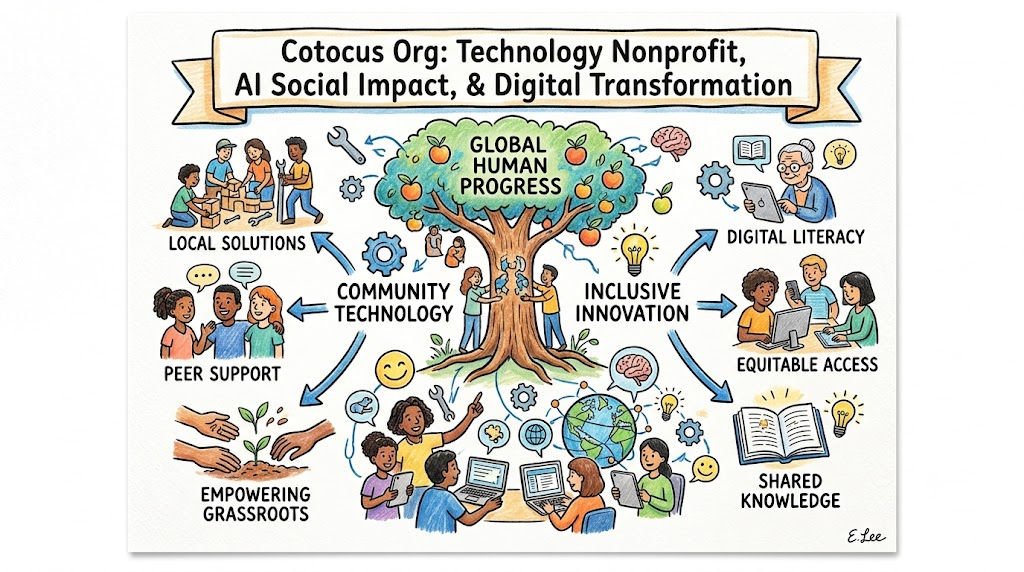
Cotocus builds an accessible, human-first ecosystem that makes cutting-edge computing, machine intelligence, and digital tools accessible to communities worldwide. Through immersive study tracks, neighborhood learners master core computer skills, unlock their technical potential, and establish lasting economic independence. Granting underserved students full access to modern computing concepts permanently improves their family and community futures.
Collaborative action between public institutions, ethical engineers, and civic groups directly levels the educational playing field. By sharing modern development methodologies openly, dedicated organizations enable everyday problem-solvers to turn ambitious concepts into functional, community-centered solutions.
Transforming Communities Through the Technology Nonprofit Model
Operating as an independent public-benefit entity, a Technology Nonprofit Organization directs advanced engineering frameworks, open-source repositories, and educational programs toward social equity rather than venture capital profits. Commercial software vendors naturally prioritize affluent corporate clients, frequently abandoning civic agencies and under-resourced districts without capable technical resources. Mission-driven groups correct this structural gap by treating digital literacy and systems access as universal public utilities.
These community-led organizations share their source code openly, allocate program resources directly into local neighborhoods, and evaluate their achievements through verifiable human development rather than quarterly dividend distributions. Because social impact steers every operational choice, these teams establish neighborhood technical labs, distribute unencumbered educational toolkits, and build collaborative spaces where anyone can master computational logic without tuition hurdles.
| Primary Dimension | Proprietary Commercial Firm | Technology Nonprofit Organization |
| Guiding Motivation | Investor wealth creation and user capture | Human capability and universal equity |
| Intended Beneficiaries | Commercial enterprises and subscription clients | Underserved students, jobseekers, and community groups |
| Code Governance | Closed intellectual property and restrictive licenses | Public code repositories and open documentation |
| Progress Measures | Recurring software revenues and enterprise valuations | Lives uplifted, competencies built, and civic tools deployed |
Delivering Equitable Access with Digital Inclusion and Literacy
Sustained economic participation demands that individuals understand how to navigate administrative portals, secure quality employment, and utilize digital banking safely. Despite the digital age, millions of households continue to function without personal laptops, stable home broadband links, or basic technical guidance. Grassroots coalitions overcome these persistent bottlenecks by launching direct, neighborhood-level interventions that combine physical equipment with empathetic instruction.
Comprehensive Digital Inclusion Programs deliver functional computers, erect neighborhood wireless access zones, and run walk-in support stations within underserved corridors. Concurrently, structured Digital Literacy Programs teach foundational computer skills so that every participant navigates modern interfaces with absolute confidence:
- Hardware Distribution: Supplying dependable workstations and peripherals directly to community spaces, libraries, and youth centers.
- Connectivity Deployment: Building municipal-grade wireless links to bridge connectivity voids across residential districts.
- Everyday Competence: Teaching primary computer navigation, credential management, web research, and office productivity tools.
- Cyber Defense Habits: Training participants to spot phishing campaigns, defend personal credentials, and navigate the web securely.
Building Generational Mobility Through Technical Education
Basic web navigation helps users complete administrative tasks, but true socioeconomic mobility requires deep mastery of modern computing stacks. Ongoing automation constantly reshapes the workforce, requiring modern engineers to master cloud architecture, relational databases, and full-stack software development. Lasting career advancement demands dedicated, continuous technical upskilling.
Comprehensive Technology Education Programs provide immersive, project-driven software development curricula that prepare students for competitive engineering careers. Students write clean code, solve algorithmic problems, and build functional digital products under the guidance of seasoned senior engineers:
- Foundational Architecture: Learners master modern programming syntax, version control, and database structures.
- Collaborative Production: Student teams build scalable microservices using agile delivery workflows and automated testing suites.
- Cloud Deployment: Cohorts configure continuous delivery pipelines, run automated tests, and deploy live applications on cloud providers.
- Professional Showcases: Candidates present their completed open-source projects and code repositories to prospective employers.
Expanding Human Welfare Through AI for Social Impact
Modern machine learning speeds up data analysis dramatically, yet corporate firms usually focus these engines on digital advertising platforms and corporate automation. When conscientious software developers point predictive systems at humanitarian crises, automated models discover fast, practical answers for medical diagnostics, sustainable agriculture, and climate mitigation.
Targeted AI for Social Impact initiatives unite data scientists, domain researchers, and frontline workers to solve pressing localized problems. For instance, regional healthcare workers deploy lightweight image classification models on mobile devices to detect health anomalies rapidly in clinics lacking access to specialized medical equipment:
- Preventative Healthcare: Delivering mobile diagnostic screening algorithms directly to rural community health workers.
- Agricultural Optimization: Analyzing weather patterns, soil moisture, and aerial data to guide local crop management.
- Emergency Response: Optimizing logistics routes for relief convoys using real-time spatial data during natural disasters.
Protecting Public Welfare with Responsible AI Research
Machine learning systems reflect the biases present within their underlying training datasets, which means unchecked algorithms can perpetuate societal inequalities. Without constant auditing, automated models can make discriminatory choices in hiring, credit allocation, and public service delivery. Tech leaders must implement rigorous accountability protocols to safeguard human dignity.
Disciplined Responsible AI Research develops practical verification benchmarks, fairness audits, and explainability standards for production machine learning models. This active oversight ensures automated tools remain accountable to the communities they serve:
- Training Data Auditing: Screening training corpuses to eliminate unrepresentative samples and historical socioeconomic biases.
- Model Explainability: Requiring automated platforms to provide human-readable rationales for sensitive administrative decisions.
- Privacy Hardening: Applying differential privacy techniques and data anonymization to protect personal constituent information.
- Human-in-the-Loop Governance: Requiring direct human review for automated decisions that affect individual livelihoods or rights.
Nurturing Future Creators Through Youth Innovation Programs
Young students possess boundless imagination and fresh perspectives, yet they frequently lack structured access to professional developer tools and experienced technical mentors. Providing young creators with modern hardware and direct technical instruction sparks remarkable creativity. Encouraging this youthful curiosity remains critical for developing resilient, self-sufficient communities.
Immersive Youth Innovation Programs create safe workshop laboratories where students build physical prototypes, write original software, and tackle local neighborhood challenges. Dedicated professional developers guide these young builders across every phase of project creation:
- Challenge Discovery: Student groups explore their local neighborhoods to identify specific operational challenges.
- Iterative Design: Teams sketch user interface concepts, outline data flows, and build structural prototypes.
- Collaborative Coding: Cohorts program functional web platforms, mobile utilities, or embedded robotics hardware.
- Community Deployment: Young innovators demo their working solutions to neighbors, gather feedback, and improve their tools.
Driving Efficiency Through Nonprofit Digital Transformation
Local charities, community clinics, and grassroots schools often handle daily tasks using manual paperwork, vulnerable desktop files, and outdated computers. These operational bottlenecks drain staff energy, cause avoidable data errors, and divert attention away from community outreach. Mission-driven teams need modern digital infrastructure to maximize their civic impact.
Tailored Nonprofit Digital Transformation efforts help social sector teams migrate to secure cloud databases, automated workflows, and coordinated communication platforms. As a direct result, community groups protect confidential case records, reduce operating expenses, and expand their local reach:
- Cloud Migration: Moving legacy physical paper records into resilient, encrypted cloud storage environments.
- Process Automation: Launching intuitive online intake forms to eliminate time-consuming manual record updates.
- Performance Analytics: Consolidating program metrics into simple dashboards to improve operational decisions.
- Access Governance: Enforcing mandatory two-factor authentication, permission controls, and regular backup procedures.
Fostering Change Through Strategic Coalitions and Volunteering
Overcoming stubborn educational and economic divides requires broader resources than grassroots organizations can marshal on their own. Technology corporations, research labs, and academic institutions possess deep computational infrastructure, specialized talent pools, and philanthropic capital. Strategic cross-sector collaboration puts these enterprise assets to work for the public good.
High-impact Corporate Social Impact Partnerships connect industrial capabilities with grassroots social initiatives. Simultaneously, rewarding Technology Volunteer Opportunities allow working software developers, system architects, and design specialists to share their practical expertise directly with emerging students:
- Infrastructure Grants: Enterprises provide free cloud credits, hardware tools, and enterprise software licenses to community groups.
- Technical Mentorship: Industry professionals review student pull requests, lead architectural workshops, and conduct mock interviews.
- Curriculum Alignment: Senior engineers help course creators refresh training materials to match current industry expectations.
- Civic Sprints: Volunteers contribute code directly to open-source applications built for community relief groups.
Cotocus and the Role of Accessible Innovation
The Cotocus Foundation works at the intersection of modern engineering progress and community empowerment. By treating technological fluency as an essential public asset, the foundation helps learners across all backgrounds realize their full potential.
Through structured technical tracks, neighborhood digital labs, and free instructional repositories, the organization provides communities with the resources they need to thrive in the modern digital economy. Additionally, Cotocus champions responsible engineering principles, helping creators build transparent, equitable, and privacy-conscious software solutions.
By connecting commercial resources with community initiatives, the foundation ensures technological advancements serve the wider public rather than a privileged few. Passionate volunteers, civic partners, and ambitious students collaborate across this growing network, turning modern software engineering into a practical force for human progress.
Frequently Asked Questions About Cotocus
- Which foundational purpose guides the daily initiatives of Cotocus Foundation?
Cotocus expands access to modern technology, hands-on computer education, and responsible engineering tools for underserved communities around the world.
- How do participants benefit from joining Cotocus digital literacy programs?
Students build practical computing skills, master online safety practices, and learn the essential digital workflows required for modern workplace productivity.
- Which primary fields do Cotocus AI for social impact initiatives address?
These initiatives support applied engineering projects that solve critical challenges across public healthcare, environmental protection, and community development.
- Why does Cotocus focus resources on responsible AI research?
Responsible research prevents algorithmic bias, protects personal data privacy, and ensures automated decision-making platforms remain transparent and accountable to the public.
- Who can register for Cotocus youth innovation programs?
Aspiring young programmers, inventors, and students from all backgrounds can join collaborative workshops, hackathons, and project mentorship tracks.
- How does Cotocus support charities through nonprofit digital transformation?
The foundation helps civic organizations adopt secure cloud platforms, set up workflow automation, and train administrative staff on modern productivity tools.
- How do corporations build social impact partnerships with the foundation?
Companies donate software infrastructure, provide grant funding, sponsor community workshops, and encourage their engineering teams to mentor aspiring developers.
- What technology volunteer opportunities exist for professional developers?
Experienced engineers, UX designers, and system administrators can mentor students, review open-source code repositories, run technical workshops, and build civic software.
- Does Cotocus charge tuition fees for community educational workshops?
The foundation provides public learning materials, foundational courses, and community events free of charge to remove financial hurdles for passionate learners.
- How can motivated individuals get involved with Cotocus projects today?
Interested participants can volunteer as mentors, join community research labs, or bring digital education workshops directly to their local community centers.
Final Thoughts
Measuring real technical advancement requires evaluating how directly new tools elevate everyday families across vulnerable communities. Confining technical fluency to elite corporate circles suppresses human potential and worsens existing socioeconomic divisions.
Investing in neighborhood digital literacy programs, enforcing accountable artificial intelligence standards, and cultivating cross-sector alliances lay down an equitable foundation for long-term growth. The Cotocus Foundation demonstrates how combining public classrooms with ethical software engineering opens life-changing pathways for ambitious learners across the globe.