Introduction
Every smart device in our pockets sends invisible digital signals into the air every second. Those radio waves zoom straight to tall metal poles in our towns. A short string of digits tells each pole which phone owns the message.
Without these digit pairs, cell masts would mix up every text on the planet. Your screen would lose its connection bars, and calls would fail. Phones stay online because each network follows strict number rules across all lands.
Looking up these network tags once caused big headaches for ordinary people. Luckily,
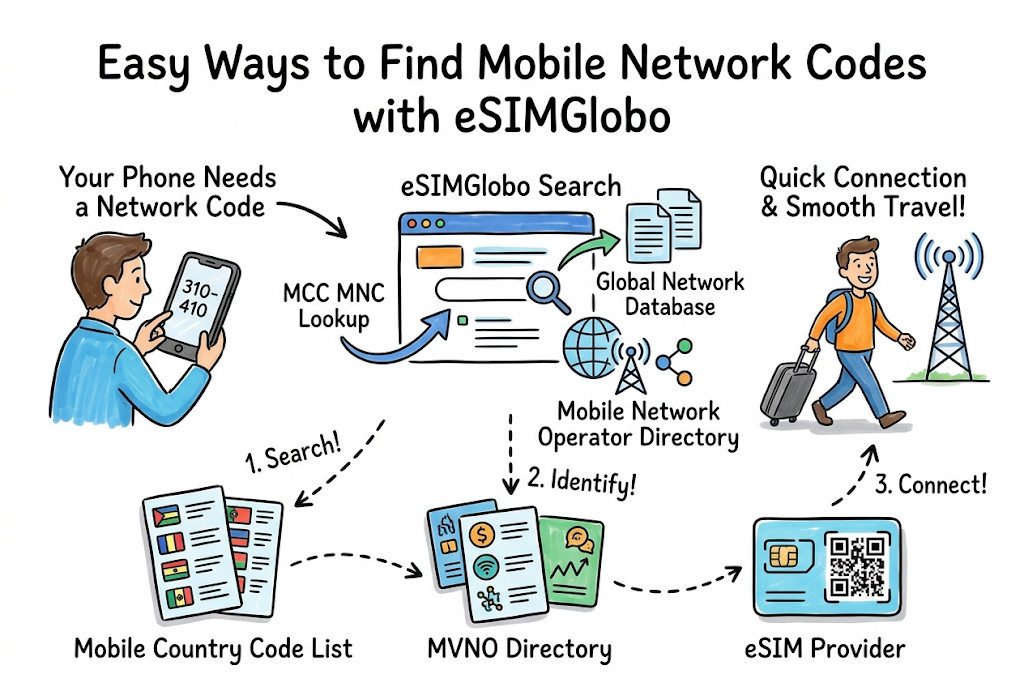
gathers all these worldwide wireless numbers into one sunny directory. Anyone can explore network owners across whole continents without getting lost.
Next, let us see how these clever numbers direct our daily calls.
How Country Identifiers Work on Earth
Every land across our planet holds a personal cellular calling tag. Radio engineers call this three-digit number a Mobile Country Code, or MCC. These three digits announce which country runs the local radio airwaves.
Our mobile country code list helps you find these nation tags in seconds. The United States uses 310, while Mexico relies on 334. Japan connects callers with 440, while Spain links phones through 214.
So, your phone reads this country tag the moment you step off an airplane. It matches the three digits to local towers standing near the runway. Because of this quick match, your phone shows a fresh map before you leave the airport.
You can call your family right away to tell them you arrived safely.
Why Phones Pair Carrier and Country Numbers
Several phone companies share the airwaves inside every country line. Each separate carrier gets its own short number called a Mobile Network Code. People call this tiny company tag an MNC to save breath.
A quick MCC MNC lookup shows which company owns each number tag. When you place the country digits right beside the company digits, you create a master code. Engineers call this full combined string a PLMN code.
A simple PLMN code lookup reveals the exact business that powers that tower. App creators read these paired codes every day so their apps run smoothly. The combined code works like a complete street address for cell masts.
Also, it keeps different phone brands from crossing paths in the sky.
Quick Look at Mobile Identity Codes
This simple table shows how the three cellular tags divide their daily jobs.
| Tag Name | Full Meaning | Daily Duty | Real Example |
| MCC | Mobile Country Code | Points to the nation | 310 (USA) |
| MNC | Mobile Network Code | Points to the company | 410 (AT&T) |
| PLMN | Public Land Mobile Network | Points to the whole network | 310-410 |
Touring Cell Systems Across Planet Earth
Different countries run their phone masts using their own special rules. A helpful global telecom provider directory brings all these rules together in one place. You can explore mobile network codes by country to learn how phones talk across oceans.
A student coder named Liam once built an online game for his school friends. His players in Brazil kept losing their connection because local towers used new network codes. Liam opened an open telecom directory and studied the Brazilian numbers for five minutes.
He updated his game settings, and all his friends rejoined the game instantly. He felt like a champion because simple numbers solved his giant software puzzle.
You can also use this free directory to study how world networks work.
Finding Giant Tower Owners Everywhere
Large phone companies set up massive steel towers on green hills and tall city roofs. A clear mobile network operator directory lists every single tower owner without hiding details. It shows true business names, operating areas, and official government permits.
These huge firms buy direct radio rights from government groups. They spend huge sums of money every year to keep data connections super fast. Researchers read these records to see which company covers the longest highways.
Delivery teams also check these records to keep tracking devices online. A delivery van stays on schedule because reliable towers report its location all day.
So, clean wireless records help packages reach our doorsteps right on time.
The Smart World of Budget Phone Brands
Some popular mobile brands choose not to build giant steel towers. Instead, these teams rent signal space from the biggest tower owners. People call these friendly budget helpers virtual operators, or MVNO brands for short.
A searchable MVNO directory helps you discover these low-cost options in a snap. Virtual networks pass big bulk savings directly to students, gamers, and busy families. They keep monthly prices low while still giving you full connection bars.
A runner named Mia wanted a cheap phone plan for her daily workouts. She opened a network database to see which big towers powered a budget brand. She bought that lower plan and saved twenty-five dollars every single month.
Because of virtual brands, families enjoy fast mobile web without spending too much cash.
Little Digital Chips for Easy Travel
Old plastic SIM cards are very tiny, so people drop them and lose them often. New smartphones now carry a tiny digital chip built straight into the phone body. We call this clever built-in chip an eSIM.
An eSIM provider directory helps travelers compare digital plans before booking vacations. You never have to stand in long airport lines to buy plastic chips again. Instead, you just scan a square picture code with your phone camera.
Your smartphone downloads the travel plan and links to local masts in two minutes. Travelers love this simple trick because it saves valuable vacation time.
Next, you can switch between your home plan and your travel plan with one tap.
Official Facts Inside Big Telecom Archives
Radio carriers keep neat files of their tower permits every single day. A solid telecom operator database stores these official notes inside a digital library. It collects verified facts straight from the International Telecommunication Union records.
College teachers and science students check this library to see where towns need new internet towers. Industry studies show that neat network files prevent forty percent of setup errors for technicians.
Tech teams also link straight into an MCC MNC lookup API to speed up their projects. Their computer programs ask for a carrier name and get an instant answer.
This fast connection keeps global travel apps running without annoying delays.
Who Uses Wireless Data Every Day
Different people rely on mobile network facts to finish important projects.
- App Developers: They check network tags so login text codes reach users right away.
- Family Travelers: They check country codes to pick the cheapest digital travel chips.
- Tech Researchers: They study carrier codes to track how cell towers expand into small towns.
- Gadget Builders: They program smart watches so children can call home from the playground.
Simple Steps to Check Any Network Code
Follow this easy plan whenever you want to inspect a cellular code.
- Find the Digits: Check your phone settings to see your three-digit country tag.
- Search the Library: Type the numbers into an open telecom search bar online.
- Read the Name: See which company pairs with your numbers on the screen.
- Confirm Your Signal: Check the coverage map before you pack your bags for a trip.
A veteran radio tech named Noah Campbell recently shared this useful thought:
“Accurate carrier numbers take away all the headache for radio teams. When you verify your numbers early, every smartphone connects on the very first try.”
Frequently Asked Questions About eSIMGlobo
Does eSIMGlobo charge visitors for its tools?
No, eSIMGlobo offers a completely free directory to search global cell codes.
Which job belongs to a Mobile Country Code?
A country code marks the exact nation where a radio mast operates.
Can you explain what a Mobile Network Code does?
It is a short digit tag that identifies the specific phone company.
Why do engineers study a PLMN code?
The PLMN code joins country and carrier tags to name a network uniquely.
Do app makers need this telecom information?
Yes, software coders use these numbers so their apps send notifications without errors.
Can visitors locate discount virtual brands in the records?
Yes, you can search discount phone firms and see which big towers they rent.
How does an eSIM make use of these numbers?
An eSIM reads these specific codes to download and activate mobile travel plans digitally.
Who verifies all the telecom data in the database?
The platform checks facts against official records from the International Telecommunication Union.
Must people pay fees to search these records?
No, anyone can search network numbers and view carrier records for free.
How do these facts assist world travelers?
Vacationers can check signal maps before trips to avoid losing their internet bars abroad.
Bright Horizons for Wireless Network Explorers
Hunting down good cellular network facts should never feel like a hard school test. Tiny number pairs quietly direct every funny video, phone call, and chat message you share today. When you understand MCC and MNC numbers, you see how cell signals travel the world.
A friendly platform like eSIMGlobo makes discovering these global cell facts super simple for everyone. The open library puts verified network data directly into your hands without any confusing words.