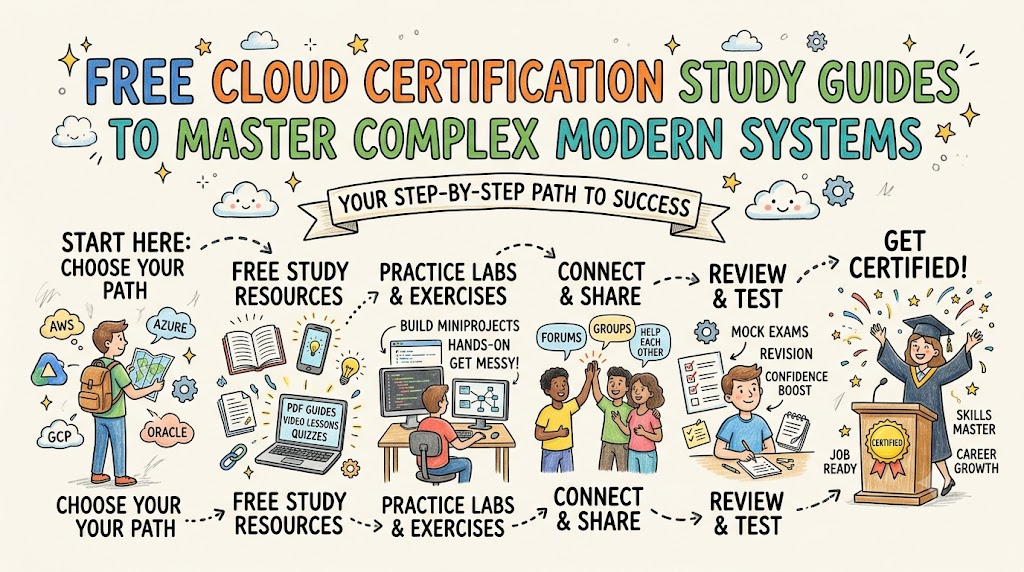
The cloud is just someone else’s computer that you reach over the web. People save photos, games, and big apps on these distant machines. When you learn how these systems work, you unlock awesome tech skills. You can earn a badge called a certification to show your knowledge.
A certification test proves that you know how to run cloud tools safely. However, test books can cost a lot of money. You can find helpful lessons on the Freeebooks website to prepare for your test without paying a dime.
Why Free Guides Help You Learn
Free study books help you learn at your own pace at home. They break big technical ideas into small, bite-sized lessons.
You do not need to spend your savings to get ready. Instead, you can read clear guides online and practice with simple exercises.
Key Operational Concepts You Must Know
What Cloud Computers Do Every Day
Cloud systems run all day and night to keep websites open. If one server breaks, another server takes over the work right away.
This smart trick keeps your favorite games and apps working smoothly. Engineers call this safety trick high availability, which just means the system rarely turns off.
How Cloud Storage Keeps Files Safe
You must choose the right spot to save your files. Some data needs quick access, while other files can sit in cold storage.
Cold storage holds old records that you do not need very often. Because cold storage costs less, it saves companies a lot of cash.
Keeping Your Digital Doors Locked
Security is the most important part of any computer network. You must give passwords and keys only to people you trust.
Engineers use rules called access policies to lock private folders. These rules stop bad actors from peeking at secret information.
Watching Over The Cloud Network
You must watch your cloud systems to see how fast they run. Smart tools send warning alerts when a machine gets too hot or full.
Next, the team can fix the small problem before users notice any lag. So, good monitoring stops surprise crashes from happening.
Platform Implementation vs. Culture — What’s the Real Difference?
| Daily Focus Area | Building The Tech Setup | Growing The Team Habits |
|---|---|---|
| Main Goal | Set up servers and connect cables. | Help people share ideas and learn together. |
| Daily Work | Type code and configure settings. | Talk kindly and solve problems as a team. |
| How to Win | Keep all the machines running fast. | Build trust and try new things without fear. |
| Who Owns It | Computer engineers and system admins. | Every single person working at the company. |
Setting Up The Tools
Setting up your tools means clicking buttons and typing code. You turn on virtual machines and link them together through digital cables.
Computers will do whatever your commands tell them to do. But machines cannot fix a broken team plan by themselves.
Teaching The Team Good Habits
A great culture teaches teammates to help one another every day. When workers talk openly, they find and fix errors much faster.
People should feel safe to ask questions when they get stuck. As a result, happy teams build much better cloud projects.
Real-World Use Cases of Modern Operations
Streaming Video Without Any Buffering
Movie apps use cloud networks to send videos to millions of screens. When a new show comes out, millions of kids watch at once.
The cloud creates more servers instantly to handle the big rush. Then, it turns those extra machines off when everyone goes to sleep.
- System Builders: Turn on extra computers before a big show starts.
- Support Helpers: Answer user tickets if an app freezes up.
- Security Guards: Make sure nobody steals private video files.
Saving Games Across Different Devices
Modern video games save your progress directly inside the cloud. So, you can play on a console and keep going on your phone.
The cloud syncs your coins, levels, and items in real time. Because of this, you never lose your hard-earned high score.
- Game Makers: Connect game save files to fast cloud databases.
- Network Testers: Check for lag so games run super smooth.
- Data Checkers: Fix broken game saves so players stay happy.
Common Mistakes in Operations Engineering
Forgetting To Turn Off Extra Machines
Leaving cloud computers on when nobody uses them costs extra money. Imagine leaving every light on in your house for a whole year.
Your power bill would jump up very fast! So, always set timers to shut down test systems when you finish work.
Using The Same Easy Password
Never use simple passwords like “12345” to protect your cloud projects. Bad actors can guess weak words in just a few seconds.
Use long passkeys with strange numbers and symbols instead. Also, turn on two-step login checks to keep bad people out.
Simple Safety Rule: Always lock your cloud doors with two different keys. A strong password combined with a phone code keeps your work safe.
Skipping Regular Practice Backups
A backup is a spare copy of your most important files. Some engineers make copies but never test if those copies actually open.
If a hard drive snaps, an untested backup might fail to open. Next, you lose all your work forever, which causes big tears.
How to Become an Operations Expert — Career Roadmap
Step One: Learn The Basics First
Start by learning how the internet talks to different computers. You should read simple guides that explain web addresses and home routers.
Next, pick one major cloud brand and study its starter guide. Learning the basic words will make the harder tests feel very easy.
- Level 1 Starter: Learns cloud words and reads free study guides.
- Level 2 Builder: Builds tiny websites and connects small databases.
- Level 3 Master: Runs giant cloud fleets and teaches other workers.
Step Two: Build Fun Mini Projects
Reading books is great, but building real things teaches you faster. You can create a free account to make a simple web page.
Try putting a picture on a web server so your friends can see it. Hands-on practice turns confusing ideas into simple, clear memories.
Step Three: Pass Your First Test
Sign up for a starter exam once you finish your practice tests. Take your time, read every question twice, and stay calm.
When you pass, share your shiny new badge with your friends and family. This big win will give you confidence to tackle harder tech goals.
FAQ Section
- Do I need to pay money to study for a cloud test?No, you can find many free study guides, videos, and cheat sheets online. These free tools teach you everything you need to know to pass.
- How long does it take to learn the basic cloud words?Most beginners can learn the core ideas in about four to six weeks. If you study thirty minutes each day, you will learn very fast.
- What happens if I fail my practice test on the first try?Do not worry at all, because making mistakes helps your brain learn! Just read the guide again to see why the right answer works.
- Can kids or young students learn cloud computing?Yes, anyone who enjoys computers can learn how the cloud works. You only need curiosity, some free time, and an internet connection.
- Why do companies care about cloud badges?A cloud badge proves that you worked hard and learned real skills. It shows bosses that they can trust you to run their apps.
Final Summary
Learning cloud computing does not have to feel scary or hard. Free study guides break giant ideas into friendly, simple steps that anyone can follow. When you practice every day, you build skills that help you solve real problems. Remember to keep your passwords strong, turn off spare machines, and always test your backups.
Take your time as you walk down your learning path. Build fun projects, test your knowledge with quizzes, and celebrate your progress along the way. Soon, you will earn your certification badge and feel like a true tech hero! Keep reading, stay curious, and enjoy your exciting journey into the cloud.