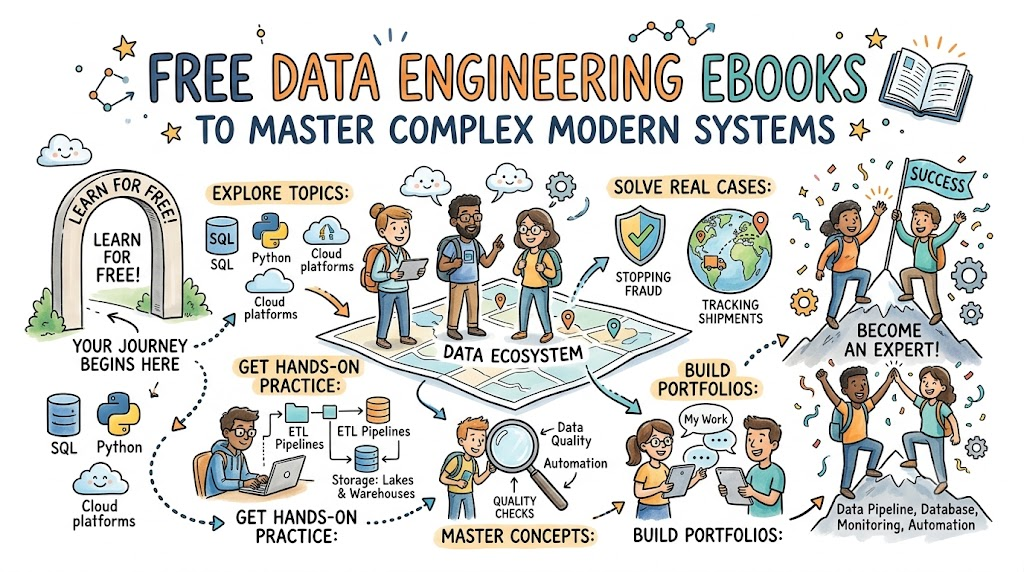
Data engineering means building digital roads for computer information. Apps and websites create tons of numbers and words every single second. Data engineers clean this raw mess and move it into neat digital bins. Then, data scientists can study these bins to spot helpful patterns.
Learning to build these digital roads takes practice and patience. But you do not need to buy costly textbooks to learn. You can read helpful materials on the Freeebooks website to start learning today for free.
Why Free Books Help You Learn Fast
Free books let you study big tech skills right from your home desk. These guides explain tricky machine setups using simple words and drawings.
Also, you can read them at your own speed without feeling rushed. You can practice simple code and test your skills as you go.
Key Operational Concepts You Must Know
Building Clear Data Pipelines
A data pipeline works like a clean water pipe in your house. It pulls messy information out of games or apps through digital tubes.
Next, the pipe filters out errors, duplicates, and broken words automatically. Then, it dumps neat and tidy information into a main storage room.
Storing Data In Lakes And Warehouses
Engineers put different types of files in special storage spots. A data lake holds fresh, raw files that nobody has cleaned yet.
A data warehouse holds super clean files that are ready for work. So, picking the right bin helps your team find answers much faster.
Running Tasks On A Smart Clock
Computers must run their cleanup jobs on a set schedule. Engineers use smart timers to run tasks late at night when people sleep.
If one job fails, the timer sends a message to the team right away. This quick alert keeps the digital plumbing running smoothly every morning.
Checking The Quality Of Your Numbers
Bad numbers can trick bosses into making silly business choices. So, engineers run quick math checks on all new files.
These checks make sure numbers are not missing or set below zero. High-quality data keeps everyone happy, safe, and productive.
Platform Implementation vs. Culture — What’s the Real Difference?
| Daily Focus Area | Building The Tech Setup | Growing The Team Habits |
|---|---|---|
| Main Goal | Set up servers and connect database pipes. | Help workers share information and solve problems kindly. |
| Daily Work | Write clean code and build fast pipelines. | Talk about data rules and teach new skills daily. |
| How to Win | Deliver fast, clean data with zero crashes. | Make sure teammates trust the numbers they see. |
| Who Owns It | Data engineers and system architects. | Every single person working across the company. |
Setting Up The Tools
Setting up your tech setup means installing software and writing computer scripts. You pick the best databases and connect them to live servers.
These tools move gigabytes of numbers every single minute without stopping. But fancy software alone cannot fix a confused work team.
Building Good Team Habits
A great team culture helps people work together without fear. Teammates must talk openly about mistakes so they can fix bugs fast.
Good teams also write clear notes so everyone understands the pipelines. Because of this shared trust, projects finish early and work great.
Real-World Use Cases of Modern Operations
Delivering Fast Food Hot And Fresh
Food delivery apps track thousands of hungry customers and delivery drivers at once. The app matches the closest driver to your favorite burger place.
Data pipelines update the map so you can watch your driver move. This clever engineering keeps your French fries warm and crispy.
- Pipeline Builders: Move live GPS pins to the customer map screen.
- Database Keepers: Save restaurant menus and prices so they load instantly.
- System Testers: Check that order tickets never get lost during dinner rushes.
Stopping Credit Card Cheats
Banks use data pipelines to stop thieves from stealing money. When you buy a toy, the bank checks your purchase location immediately.
If a purchase happens far away, the system blocks the card fast. This quick visual math protects family savings accounts from bad guys.
- Security Watchers: Set up instant alerts to flag strange spending habits.
- Data Cleaners: Fix broken merchant names so bank statements look clear.
- Storage Managers: Lock customer bank records inside secure digital vaults.
Common Mistakes in Operations Engineering
Saving Useless Junk Forever
Some teams save every piece of garbage data they ever collect. Storing useless records wastes money and makes search queries run super slow.
You should toss out junk files that nobody has opened in months. Keeping your digital bins tidy saves money and speeds up your work.
Skipping Simple System Alerts
Never build a data pipeline without adding warning bells along the way. If a pipe breaks quietly, users might read empty reports for days.
Always program your machines to ping your phone when a job fails. Early alarms help you fix leaks before anyone notices a problem.
Simple Data Rule: Always add warning bells to your pipelines. A fast alert helps you fix small breaks before they become giant disasters.
Forgetting Clear Instruction Manuals
Engineers sometimes write clever code but forget to write down how it works. If that engineer goes on vacation, nobody else can fix a crash.
Always write short, simple guides for every pipeline you build. Good notes make you a wonderful teammate and keep projects running smoothly.
How to Become an Operations Expert — Career Roadmap
Step One: Learn Basic Query Words
First, learn how to talk to databases using a language named SQL. SQL helps you ask databases simple questions to find hidden answers.
Next, read free beginner ebooks to learn how computers store tables. Practicing thirty minutes every day will help your brain grow fast.
- Junior Pipeline Helper: Writes simple SQL queries and fixes tiny bugs.
- Senior Data Builder: Designs large pipelines and sets up cloud storage.
- Chief Data Guide: Teaches teams how to use data safely and efficiently.
Step Two: Practice Writing Simple Code
After learning SQL, pick up an easy coding language like Python. Python lets you write short scripts to clean up messy text files.
You can download free spreadsheets online and sort them with code. Hands-on practice turns confusing ideas into super fun memories.
Step Three: Build Your Own Portfolio
Create a free account to show off your practice projects to others. Build a simple project that pulls weather reports and saves them cleanly.
Share your project link with friends, family, and future team leaders. Showing real work proves that you know how to build great tools.
FAQ Section
- Do I need to be a math genius to learn data engineering?No, you only need simple logic and a willingness to practice every day. Most daily work uses basic sorting, counting, and organizing skills.
- Can I learn all these skills using only free ebooks?Yes, free ebooks cover everything from beginner SQL to advanced pipeline design. You can master all the core tools without spending any money.
- What is the difference between a data scientist and a data engineer?A data engineer builds the pipes that clean and deliver fresh data. A data scientist studies that clean data to find neat business answers.
- Which coding language should a complete beginner start with?Start with SQL because it helps you read and find database tables easily. Next, learn basic Python so you can automate your cleanup chores.
- How long does it take to build your first working data pipeline?You can build a tiny, working pipeline in just a few days of study. Start small with a simple text file and grow from there.
Final Summary
Data engineering keeps modern apps, games, and online stores working properly every day. By building clean digital pipelines, you help teams turn messy numbers into helpful answers. Learning these practical tools opens up fun tech paths without requiring costly college courses. Remember to clean your data bins, set up quick warning bells, and write helpful notes for teammates.
Start your learning journey by reading free ebooks and trying tiny coding exercises. Build simple projects, test your work, and enjoy watching your digital pipelines run smoothly. Every expert started out as a curious beginner who loved solving neat puzzles. Keep reading, keep building, and have fun exploring the exciting world of data systems!