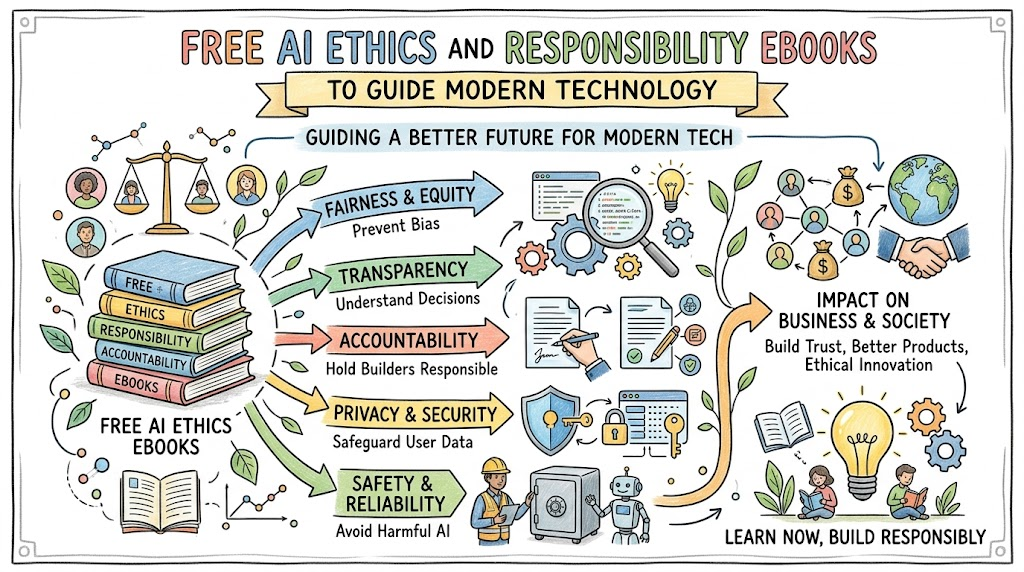
Smart computer programs now help people make big life choices every single day. Computers help doctors spot sickness, and they help banks check loans. But these tools must treat every person fairly and keep private secrets safe. You can learn these vital ideas by reading guides on Freeebooks. These guides show how to build helpful tools that never harm society.
Ethics means knowing the difference between right and wrong actions. Responsibility means taking full blame if your work hurts someone else. When we build smart machines, we must teach them good rules. These free digital books show everyone how to do that step by step.
What AI Ethics Really Means
Ethics is like a set of helpful playground rules for computers. Smart tools learn by looking at old facts collected from humans. If those facts have unfair habits, the tool repeats those bad habits. Therefore, programmers must guide the tools to treat all people kindly.
Programmers must check their work to stop unfair choices early. When computers make choices, people want to know why. Good rules make sure the math never hides unfair tricks. That is why digital guides teach fairness before anything else.
Key Operational Concepts You Must Know
Making Math Clear and Open
Many smart tools act like closed boxes that hide their inner secrets. People cannot see how the computer picked one answer over another. So, developers use explainable methods to show the real steps behind decisions.
When the math is clear, doctors and teachers can trust the results. If a machine makes an odd choice, humans can quickly see why. This openness keeps users safe from quiet software bugs.
Guarding Private Human Data
Smart machines need lots of facts to learn their daily jobs. Sometimes, these tools read private names, home addresses, or secret health files. Because privacy matters, engineers must lock down every file tightly.
Good teams clean out personal names before feeding facts into any software. This clever habit protects users from nasty data leaks. Clean habits keep trust strong between companies and normal users.
Keeping Humans in Charge
A computer should never make huge life choices totally alone. Instead, human workers must review the final choices made by machines. Experts call this teamwork human in the loop.
If a machine makes an error, a human can cancel it fast. This safety step keeps computers from doing harm in hospitals or courts. Machines offer helpful advice, but people must make the final call.
[Raw Information] ➔ [Fairness Check] ➔ [Smart Computer] ➔ [Human Review] ➔ [Safe Decision]
Stopping Unfair Computer Habits
Computers do not have real feelings, but they can still copy bias. Bias means favoring one group while treating another group badly. If old books have mean ideas, a computer might copy them.
Engineers must test datasets carefully to spot these mean habits early. They fix the math so it treats every person with equal respect. Doing this makes technology friendly and helpful for every background.
Platform Implementation vs. Culture — What’s the Real Difference?
| Daily Focus | Platform Tool Setup | Team Culture and Habits |
|---|---|---|
| Main Goal | Set up code tests and check rules automatically. | Teach workers to care about fairness and human safety. |
| Daily Work | Run software scans to find bad data records. | Talk openly about right and wrong in team meetings. |
| Key Measure | Count fixed code bugs and measure system speed. | Watch how quickly workers stop unsafe software launches. |
| True Owner | Managed by computer coders and server teams. | Shared by every single worker across the whole company. |
Setting Up the Code Tools
Setting up safety tools is the mechanical half of the job. Tech teams download scanners that test files for bad bias. These tools send quick alerts when math scores lean unfairly.
Yet, software tools cannot solve every single human issue alone. A scanner can find broken code, but it cannot feel empathy. That is why tools only work well when smart people run them.
Building a Caring Team Mindset
A fair team culture encourages workers to speak up without fear. If an engineer spots an unfair feature, they can halt the project. Leaders must reward workers who stand up for human safety.
When teams care about people, they build much safer products. They test products on diverse groups before selling them to the public. In the end, good team habits matter more than fancy software tools.
Real-World Use Cases of Modern Operations
Keeping Health Tools Safe
Hospitals use smart software to scan chest photos and find sickness early. These tools help doctors save many lives during busy hospital shifts. But doctors must check every machine guess before giving strong medicine.
Free guides teach medical teams how to test these medical helpers safely. Regular checks ensure the tool works equally well on children and adults. As a result, patients get safe care without scary surprises.
- Hospital Doctors: Look at machine hints, then make the final healing choice.
- Clinic Nurses: Check patient vital signs to ensure the computer logged them right.
- Health Data Techs: Remove patient names from files to keep home secrets private.
Making Bank Loans Fair
Banks now use computer math to decide who gets money for a house. In the past, bad math sometimes denied money to good families unfairly. Today, smart banks read guides to fix these broken loan systems.
New rules force the computer to look only at honest money habits. The machine cannot judge people by their skin color or home neighborhood. Consequently, more families can buy homes with fair interest rates.
Improving Online Job Searches
Big companies use computer tools to read through piles of job applications. If the tool prefers male names, it drops great female workers unfairly. Fair guides show managers how to hide names while grading work skills.
- Hiring Bosses: Grade work samples without knowing the applicant’s age or background.
- Company Recruiters: Pick top resumes based entirely on real past achievements.
- Job Applicants: Enjoy a fair shot at landing great new jobs.
Common Mistakes in Operations Engineering
Trusting Machine Answers Blindly
Some workers think computers never make mistakes because math seems perfect. But computers make silly mistakes whenever they read strange or messy data. Accepting machine output without double checks can cause terrible real-life blunders.
Always treat a computer guess as an early draft, not a final truth. Ask yourself if the answer makes good, common sense before acting. Staying alert keeps tiny math errors from turning into massive headaches.
Simple Safety Rule: Never let a machine make life-changing choices without a real human checking the work. Real humans carry the true blame when things go wrong.
Skipping Regular System Audits
Teams often test their software once and then forget to test it again. Over time, real life changes, but old computer code stays frozen in place. This time gap causes the tool to make worse choices every month.
You must run regular checkups on all live computer systems. Check the new numbers to ensure the software stays fair and helpful. Regular checkups protect your users from slow, quiet software rot.
Forgetting Everyday Users
Engineers sometimes build systems without asking normal people for their thoughts. If you never talk to actual users, you will miss obvious daily problems. A tool that feels easy to a programmer might confuse a parent or teacher.
Invite normal people to try out your tools before you launch them. Listen to their worries and fix the parts that feel scary or strange. Designing for real people makes your final product far more successful.
How to Become an Operations Expert — Career Roadmap
[Learn Basic Rules] ➔ [Practice on Datasets] ➔ [Lead Fair Projects]
Learning Foundational Rules
Start your journey by reading beginner guides about fairness and computer logic. Learn how coders turn real-life questions into computer math and data tables. You do not need hard math skills to understand basic ethical ideas.
Focus on learning the big ideas behind privacy, open steps, and human safety. Take notes on real cases where tech helped or hurt normal people. Building this basic knowledge base will give you confidence for bigger tasks ahead.
Practicing on Real Datasets
Next, practice testing sample datasets using simple, free software tools at home. Try to spot missing facts or unfair trends hidden inside old spreadsheets. Then, write short guides explaining how to fix those data flaws clearly.
- Junior Safety Reviewer: Tests test files for missing facts and unfair trends.
- Mid-Level Systems Planner: Designs fair testing rules for new engineering projects.
- Lead Ethics Director: Sets the big safety vision for the entire company.
Leading Fair Tech Projects
Finally, learn to explain technical hazards to business managers using plain words. A great expert helps companies build awesome tools without causing social harm. You will guide teams toward safe designs that protect everyday human rights.
Great communication skills will help you win top leadership roles in technology. Companies love hiring workers who know how to avoid costly legal mistakes. Keep reading new guides, stay curious, and always champion human safety.
FAQ Section
- Why should I read free guides about computer fairness?These free books teach you how to make technology safe without spending money. They show you how to spot bad computer habits and build fair digital tools.
- Can a computer program truly know the difference between right and wrong?No, computers only follow math instructions and copy patterns found in old facts. Humans must teach machines good rules and watch them to ensure they stay safe.
- What is data privacy in simple words?Data privacy means keeping your personal facts, like your name and secrets, safe from strangers. Good software locks up these files so bad actors cannot steal them.
- Who is to blame when a smart tool makes a bad mistake?The humans who built and used the software carry the true blame for mistakes. You cannot punish a machine, so people must take full responsibility for outcomes.
- Do I need to be a math genius to study tech ethics?No, tech ethics is mostly about fairness, honesty, kindness, and clear human communication. Anyone who cares about people can learn how to make technology much safer.
Final Summary
Learning about fair technology helps us build a much brighter digital future. When computers treat everyone equally, society becomes happier, safer, and far more productive. But we must never let machines make big life choices without careful human eyes watching.
Take time to read free guides and share these important lessons with your teammates. Practice checking your data, speak up when you spot flaws, and put humans first. By learning these simple habits today, you help make tomorrow’s technology safe for the whole world.