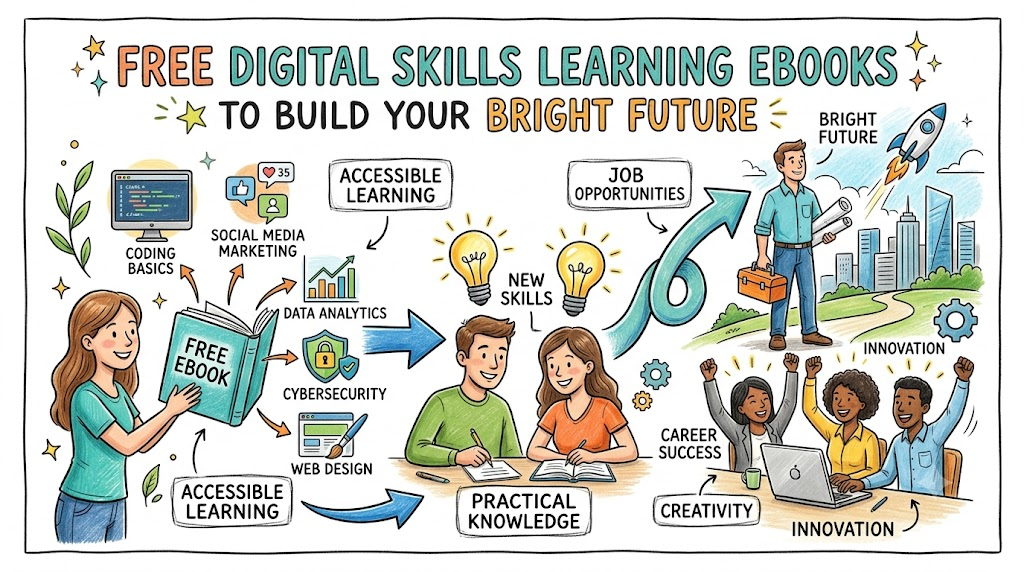
Computers change our world fast. Because of this, everyone needs to learn digital skills today. Digital skills mean using phones, computers, and the web to solve problems. These tools help you build things and find great jobs.
You do not need to spend money to learn these tools. In fact, you can find free books online. You can read great guides on Freeebooks to start right now. These simple books teach you step by step with easy words.
Key Operational Concepts You Must Know
Understanding How Tools Connect
First, you must know what happens inside computer systems. When you tap a screen, data moves across the web. Data is just facts, numbers, and words stored on computers. Fast systems keep this data safe and clean.
Next, smart apps organize these facts into neat piles. This helps workers read reports without getting confused. Because apps share facts smoothly, teams finish projects much faster.
How Systems Run Every Day
A computer system needs care to run well every single day. Teams watch these systems to make sure they never break down. If a problem pops up, workers fix it in minutes.
Also, good workers test their tools often. They click every button to see if it works properly. When tools run smoothly, people can do their work with no stress.
Keeping Digital Information Safe
Safety is a huge part of learning tech skills. Bad actors sometimes try to steal private facts and passwords. So, you must learn how to lock your files with strong passwords.
Companies use shields called firewalls to block bad visitors. A firewall acts like a locked gate on a playground fence. It only lets friendly people come inside to share files.
Automating Daily Computer Work
Doing the same boring task every day takes too much time. For this reason, smart workers write quick recipes called scripts. A script tells the computer to finish simple jobs by itself.
So, the machine copies files while you eat your lunch. This saves hours of boring work every week. Now, workers can spend more time thinking about fun new ideas.
Platform Implementation vs. Culture — What’s the Real Difference?
| What We Look At | Setting Up Tools (Implementation) | How People Act (Culture) |
|---|---|---|
| Main Goal | Download software and turn on computer servers. | Help people share ideas and learn new skills. |
| Daily Action | Install new apps and fix broken buttons. | Talk kindly and solve problems as a team. |
| Good Result | Fast apps that do not crash or freeze. | Happy workers who love to try new things. |
| Who Owns It? | The technical computer support staff. | Every single person in the whole office. |
Installing Tools Is Only Half the Job
Buying a fancy computer does not make you a tech wizard. You must set up the programs and turn on the network. But tools cannot do any real work all by themselves.
People must sit down and open the software to start learning. If nobody uses the new app, the money goes to waste. Thus, setting up tools is just the very first step.
Helping People Build Great Habits
Real success comes from how people talk and work together. Good teams share their helpful tricks and cheer for each other. When someone makes a small mistake, the team helps them fix it.
Also, curious workers read digital books to grow their skills daily. They do not fear new technology because they practice every week. As a result, the whole company grows stronger and smarter.
Real-World Use Cases of Modern Operations
Helping Doctors and Hospitals
Hospitals use digital skills to take care of sick patients quickly. Doctors read digital medical charts on small handheld tablets. Because tablets update fast, nurses see new test results right away.
Also, smart alarms tell doctors if a patient needs help. This fast system saves lives every day in busy emergency rooms. Clean data helps doctors make great choices when seconds count.
Making Online Stores Run Smoothly
Online stores use computer skills to send packages to your front door. When you buy a toy online, the system checks the warehouse shelves. Robots find the box and bring it to a packing table.
Next, the computer prints a shipping label with your home address. Delivery vans use live maps to avoid bad traffic jams on the road. So, your new toy arrives safely the very next morning.
- Store Managers: Check live sales numbers on screen to order popular toys before they sell out.
- Warehouse Workers: Use handheld scanners to track boxes and pack trucks without making mistakes.
- Delivery Drivers: Follow simple map apps on their phones to drop boxes off on time.
Teaching Kids in Classrooms
Schools use fun digital tools to help students learn reading and math. Teachers share colorful slideshows and quiz games on big screens. Because the games are fun, kids enjoy practicing hard math problems.
Also, students can read free library books on simple laptops at home. If a student gets stuck on homework, they send a quick note. The teacher replies with helpful hints to make learning easy.
Common Mistakes in Operations Engineering
Trying to Learn Too Much at Once
Many beginners try to learn ten hard computer skills in one week. But your brain gets tired when you take on too much. When this happens, people feel sad and want to give up.
Instead, pick just one simple skill and practice it every day. Learn how to make a basic website before you study robot brains. Taking small steps keeps your learning fun and easy.
Skipping the Basics
Some people want to build giant apps on their very first day. But they forget to learn basic typing and folder organization first. If your foundation is weak, your big project will crash down.
Always take time to read beginner guides from start to finish. Practice clicking buttons and saving your files in neat folders. Master the easy steps first, and hard tasks will feel simple later.
Helpful Tip: Never rush through the easy chapters of your book. Strong basic skills help you solve very hard computer problems later on.
Forgetting to Back Up Important Files
Losing all your hard work is a terrible feeling. Sometimes a laptop battery dies, or an app closes by surprise. If you did not save your file, your work vanishes forever.
So, always save your work in two safe places. You can use a thumb drive or store files on the web. This smart habit protects your homework from silly computer accidents.
How to Become an Operations Expert — Career Roadmap
Step One: Pick Up Basic Computer Skills
First, learn how your computer works from the inside out. Practice typing fast and learn how to find files quickly on your hard drive. Next, read easy books about how the global internet sends messages.
You should also learn simple word programs and math spreadsheets. Spreadsheets help you sort lists of names and numbers with ease. These simple skills prepare you for fun tech projects ahead.
Step Two: Learn to Build and Fix Things
Next, start reading free books about simple coding and website building. Coding is just writing instructions that tell a computer what to do. You can write short code lines to make shapes move on screen.
Also, learn how to connect computers together so they can share files. Practice setting up home networks and fixing small printer errors. Solving these little puzzles gives you big confidence as you grow.
- Beginner Learner: Reads free books, types notes, and learns how to navigate computer menus easily.
- Junior Tech Helper: Fixes broken app settings, organizes shared files, and writes simple computer scripts.
- Senior System Guide: Designs safe computer networks, trains new workers, and chooses the best software tools.
Step Three: Share What You Know
Finally, practice explaining your computer tricks to friends and family. A great tech expert knows how to talk kindly to non-technical people. If you can explain an app to your grandma, you can explain it to anyone.
Write down short notes to show others how you fixed a problem. Good notes help your whole team learn without getting stuck. When you share your knowledge, you become a trusted leader in your field.
FAQ Section
- Why should I read free digital skills ebooks?Free ebooks teach you useful computer skills without costing any money. They let you learn at your own pace from your bedroom desk.
- Do I need to be a math genius to learn digital skills?No, you do not need to be a genius to use computers well. If you can read and follow simple directions, you can master these skills.
- What is the best digital skill to learn first?Learn how to organize files and type quickly on a keyboard first. After that, learn how to search the web safely to find good answers.
- Can I read these learning books on my phone?Yes, most free ebooks open easily on phones, tablets, and laptops. This means you can read a quick lesson while riding in the car.
- How many hours should I practice each day?Try to practice for twenty to thirty minutes every single day. Short daily practice helps your brain remember lessons much better than cramming on weekends.
Final Summary
Learning computer skills opens up a bright world of fun opportunities. When you understand how technology works, you can build cool apps and help your community. Free learning books give you the power to learn new things without spending a dime. All you need is a little curiosity and some quiet time to practice.
Remember to take small steps and enjoy the learning journey every day. Master the basics, back up your files, and share your new tricks with friends. If you keep reading and practicing, you will become a true digital expert in no time. Grab a helpful guide today and start building your exciting future!