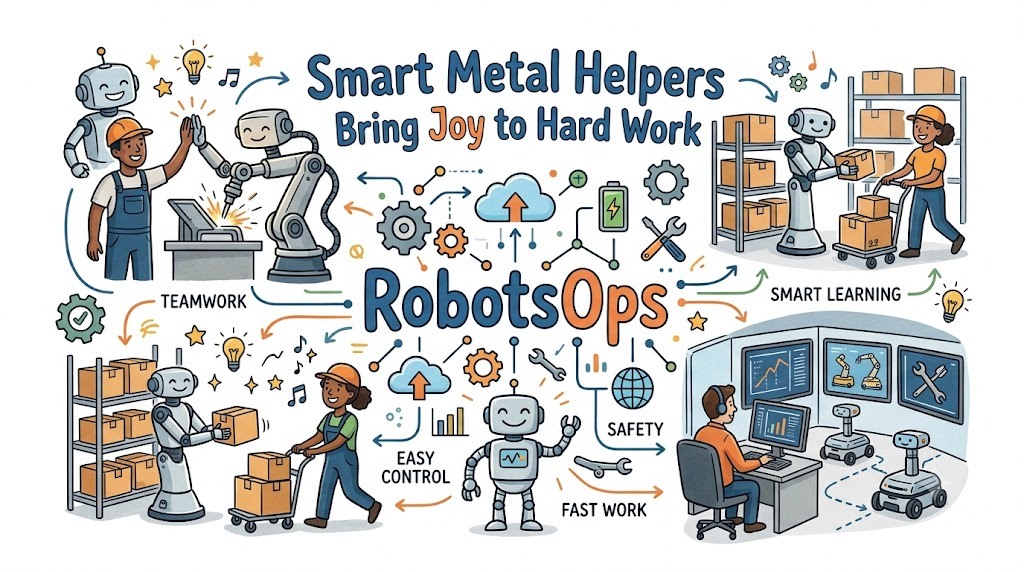
Tough metal helpers carry heavy gear across smooth floors with great care. Crews run these machines with handy software tools to finish chores fast.
Smart people watch every wheel turn, motor spin, and battery charge from safe desks. This friendly teamwork turns loud, messy buildings into neat spaces where everyone stays completely safe.
Introduction
Step right into the bright field of Robotics Operations to see machines help people. Builders call this neat path of work RobotOps.
You discover how workers look after rolling carts, big arms, and tiny motors. RobotOps gives crews easy tools to send jobs to dozens of helpers at once.
Anyone can master this fun craft by exploring the great guides on RobotsOps. This kind place helps beginners understand how real machines finish big tasks without any fuss.
Watch Keen Rollers Find Their Own Path
Small carts roll along wide aisles with zero people touching their steering wheels. Builders call these trusty helpers Autonomous Mobile Robots because they navigate on their own.
Each cart sends out invisible light beams to map every wall and stack of crates. The machine stops on a dime if someone steps into its path.
Workers set big gray tubs right on top of the moving cart. The cart hums away happily and delivers the goods to the packing counter.
How Sharp Programs Guide the Metal Body
Wheels cannot roll without clear steps from a small chip inside the metal frame. Coders make clever Robotics Software to tell the parts where to go next.
The software reads quick signals from tiny cameras, wheel gears, and tilt sensors every second. The machine makes good choices and dodges wet spots on the floor.
Teams rely on a friendly tool named ROS 2 to connect all these parts. It lets the cameras, wheels, and brains chat like good pals on a phone call.
Test Great Ideas Inside Fun Virtual Worlds
Clever folks try out new ideas on their screens before they buy real steel parts. They set up these tests inside a clean digital space through Robot Simulation.
This computer world looks just like an open video game with ramps and tall walls. Builders drop digital carts into tricky spots to see how they climb steep paths.
A digital crash breaks no costly plastic and leaves zero mess on the real floor. Coders fix their mistakes fast on the screen and save lots of cash.
Mighty Steel Arms Tackle Huge Factory Chores
Towering steel arms handle the hardest lifts inside giant truck assembly plants. Folks call these heavy workers Industrial Robotics, and they pack lots of power into each swing.
Metal joints bend quickly to glue glass, weld seams, and fasten heavy bolts. The steel limbs never take naps, pull muscles, or drop heavy steel sheets.
People stand behind yellow gates and tap bright buttons to guide the work. This plan keeps every worker safe, happy, and far away from danger.
| Machine Model | Main Chore | Best Trick |
| Rolling Cart | Carries supply bins across long halls | Spots tennis shoes with twin sensors |
| Giant Arm | Welds metal panels and bolts wheels | Lifts huge motors with total ease |
| Floor Washer | Cleans dusty tiles after sunset | Turns tight corners without a bump |
Steer a Whole Machine Troop From One Spot
No person can follow forty rolling carts around a shop floor on foot. Companies use smart Robot Fleet Management to keep every helper on the right track.
This program works just like a kind guide in a busy train station. The software spots low batteries, maps out clear lanes, and warns people about loose parts.
Two carts never race for the same narrow aisle or bump into each other. If one cart takes a rest, the program sends a pal to finish the chore.
Step Inside the Busy Hub With Wall Screens
Large fleets talk to a central room packed with giant glowing wall displays. People call this nerve center the Robotics Operations Center.
Tech staff sit in soft chairs and check bright charts on wide computer monitors. They watch battery dials, travel speeds, and map pins jump in real time.
A coder sends a fresh software fix to forty units with one single tap. If a cart pauses near a stack of paper, an engineer guides it away.
Speed Up Every Shift With Clever Automation
Shops get more work done each week by adding steady Robotics Automation to their rooms. Metal pals tape boxes, stack wood blocks, and label parcels for mail trucks.
A single roller moves heavy crates three times faster than an old push trolley. Because machines haul the heaviest loads, people keep their backs safe and pain-free.
Workers spend their work hours solving tricky riddles, testing ideas, and chatting with buyers. Friendly machines make the whole day feel calm, fast, and fun for the entire crew.
| Old Ways of Working | New Ways With Machines |
| Crews hauled heavy carts by hand | Electric rollers carry crates on wheels |
| People climbed tall ladders with clipboards | Tiny flying bots scan tags on high shelves |
| Crews fixed broken parts after big stalls | Smart sensors spot rusty bolts early |
Pick Up Cool Maker Skills Right Now
You can learn simple code steps at home using basic computer programs. Read through the simple lessons on RobotsOps to see how technicians run these lively fleets.
You find out how to test code, check sensor pins, and route moving helpers. These clear tips help any curious learner jump straight into the fun world of machines.
Frequently Asked Questions About robotsops
Can you explain RobotOps in super easy words?
It means the daily care and software management that keeps working machines in great shape. These practices keep helpers fast, safe, and ready to tackle heavy chores every day.
Why do so many builders pick ROS 2?
It acts like an open channel for computer chips, steering motors, and digital cameras. It lets different parts trade notes and orders in the blink of an eye.
How do virtual trials help someone who builds things?
New builders try their code inside a 3D digital room before spending any money. They can flip a digital cart ten times without bending real metal or breaking glass.
What chores do mobile rolling units do best?
These wheeled friends move heavy tubs, mail sacks, and spare bolts across slick floors. Their sensors spot boots and desks so they never cause a messy bump.
Why do big companies build an operations room?
Trained staff need a calm place with wide screens to watch their entire machine troop. They check batteries, push software updates, and clear traffic jams without leaving their desks.
How do big factory arms keep people safe from harm?
Mighty limbs pick up hot metal bars and weld steel frames during noisy shifts. People watch from behind clear barriers while the machines take the heat.
What takes place when a cart battery drops low?
The fleet program spots the low power mark and points the cart toward a floor charger. The machine rolls onto the copper pad and charges up all by itself.
Can young kids learn these machine concepts without trouble?
Curious kids pick up these ideas fast through simple words, neat pictures, and short steps. Clear lessons break big topics down so they make sense right away.
How do experts update many machines across one building?
Coders send fresh code through the room using safe wireless signals. Every rolling unit grabs the new software update at the very same second.
Where can curious folks find neat guides on machine care?
Curious learners turn to RobotsOps to read straightforward guides, quick code tricks, and great tips. The lessons help folks of any age guide modern machines with pride.
Smart helpers will soon take on more dull chores and keep workers safer than ever before. When folks write neat code, they solve big puzzles and build helpful tools for everyone.
Jump in, try out easy code projects, and have a blast on your exciting path with RobotsOps.