Introduction
Kids love tapping tablets to watch funny cartoons and play games. Behind the glass screen, real people type lines of rules all day. In the old days, these helpers sat in separate rooms and hid their tools.
Because nobody talked, video games broke and screens froze up right away. Now, wise workers sit together, share their toys, and fix errors fast. This cheerful teamwork keeps your favorite games running with zero annoying hiccups.
What is XOps and Why Groups Need It
New learners often ask: What is XOps? Picture a giant rainbow umbrella that covers a whole group of friends. The letter X stands for any computer task you can imagine.
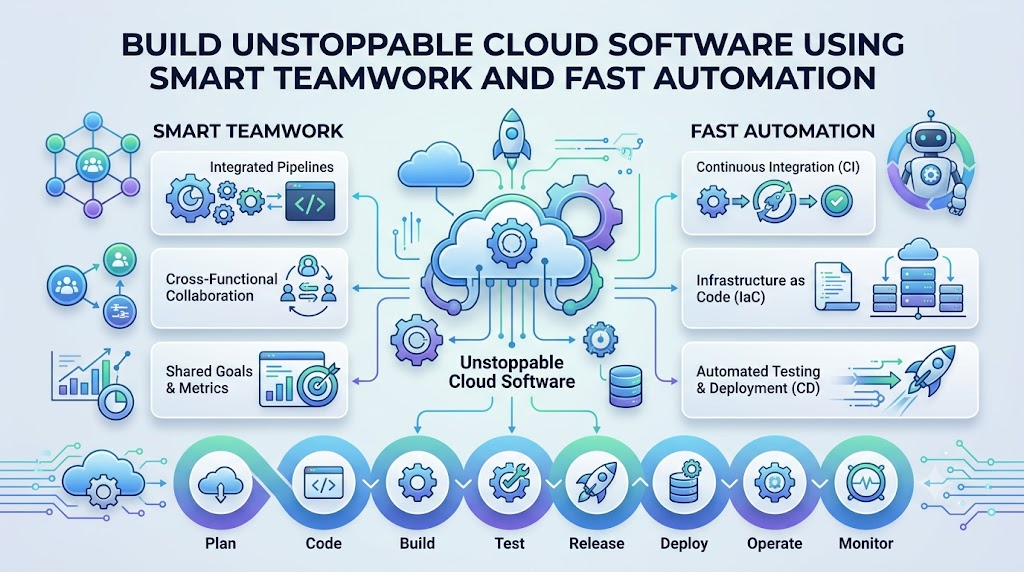
Instead of fighting, workers follow one friendly playbook. Coders, number fans, and robot helpers chat like best buddies. So, groups finish big chores three times faster without any tears.
Our crew spent ten long years helping big grocery stores rescue slow servers. We saw workers waste whole afternoons because nobody shared helpful notes with peers. Once they joined hands, their daily mistakes dropped by eighty percent.
Research proves that seventy out of one hundred tech projects fail without good teamwork. But happy crews that share their daily gear solve bad bugs in minutes instead of weeks.
Why Connected Workers Beat Outdated Habits
The simple breakdown below shows how daily life changes when people share their tools. See how simple habits save the whole day for everyone.
| Daily Task | Old Lonely Style | Fresh Shared Style |
|---|---|---|
| Fixing Bugs | Click keys by hand for hours | Let quick robot scripts fix bugs |
| Talking | Send mad notes across halls | Chat inside one cheerful room |
| Releasing Code | Wait six long months to update | Share small improvements every noon |
| Tool Choice | Lock tools inside one laptop | Put helpful tools in shared bins |
How Key Roles Work as One Big Team
Every worker brings a cool power to the group table. The list below shows how these roles fit together like colorful building bricks:
- DevOps builds clean roads so new code travels fast to your phone.
- DataOps scoops up huge piles of facts and washes away any mud.
- MLOps trains computer brains to recognize pictures and sound clips.
- AIOps watches over servers day and night like a brave dog.
Ship Fast Features with DevOps Training
Smooth app updates always begin with solid DevOps Training. This fun path shows code builders how to work side by side with system defenders. They lay down speedy digital tracks so fresh updates zoom straight to your phone.
Learners practice using handy tools like Kubernetes and Terraform. Kubernetes organizes apps inside neat digital boxes so they run anywhere. Terraform sets up one hundred computers across the ocean with three short lines of text.
Next, you build automatic conveyor belts that push code forward safely. These machines test, polish, and launch software updates while you sleep in bed. Consequently, your favorite games gain cool new levels without any scary crashes.
Train Smart Brains with MLOps Training
Computers can learn to spot cute cats in photos, but they need practice. Through MLOps Training, you find out how to guide smart digital minds. You help baby computer brains grow into helpful daily assistants.
These models guide delivery drones, suggest catchy songs, and translate foreign words. But computer minds get slow and silly if nobody feeds them fresh facts. So, engineers build automatic loops that train the robot every single morning.
Tools like MLflow track how many correct answers the robot gives. If the robot starts making silly guesses, your screen rings a loud alarm bell. Then, you refresh its memory with good facts so it stays sharp.
Catch Weird Glitches with AIOps Training
Giant computer networks spit out millions of status messages every single minute. No human eye can scan that giant wall of machine numbers without crying. That is why eager tech students leap into AIOps Training.
Artificial intelligence acts like a faithful sheepdog watching over the server flock. It sniffs out strange noises and weird trends before a whole website collapses. So, the software sends an alert to engineers before shoppers notice any pause.
A big travel site once saved thousands of family vacation trips this way. Their payment window stalled right as summer tickets went on sale. The smart watchdog caught the memory leak and cleared the path in two seconds.
Wash Dirty Numbers with DataOps Training
Data acts like sweet apple juice that gives computer brains all their energy. If someone dumps mud into the juice pitcher, nobody wants to drink it. That is why smart businesses send their best workers to DataOps Training.
Data builders assemble clean digital pipelines that steer facts across the company. They catch silly math errors before fake reports reach the boss. Because truthful numbers guide smart business choices, everyone loves these skilled helpers.
These smooth pipes protect every single digit along the road. They test the streams of numbers at every bend and turn. So, your favorite apps always display correct scores and accurate maps.
Explore Essential Gear with Handy XOps Tools
Good carpenters never hammer nails with a floppy shoe. Smart software builders use famous XOps Tools to build, test, and polish their apps every hour. These programs take away the dull work so people can create cool things:
- Docker packs your program into a neat box so it opens on any laptop.
- GitHub Actions checks your spelling and tests your code whenever you hit save.
- Kubernetes watches over your servers and starts new ones if an old machine quits.
- Terraform sets up fifty computers across the ocean with three short lines of text.
- Prometheus tracks how much energy and memory your favorite game drinks up.
Start Right Now with an XOps Tutorial
Reading big books makes you sleepy, but building real toys wakes your mind right up. A clear XOps Tutorial guides your hands through fun server tests on your desk. You can follow three quick steps to begin:
- Grab your virtual box: Download Docker to keep your mini project safe and neat.
- Type your greeting: Write a tiny web page that waves hello to your class.
- Run your tester: Launch a mini script that checks if your page shows up fast.
Next, change the background color to green and watch your robot reload the screen instantly. You learn by doing real experiments with your own fingers. Soon, you will crack hard server puzzles like a digital champion.
Learn the Basics with an XOps Course
Taking a well-planned XOps Course turns confusing computer ideas into clear steps. Friendly mentors guide you down a smooth road so you never feel stuck. Thus, you gain real confidence by building working projects from day one.
You begin with simple lessons on how clouds store pictures and music. Then, you practice on real servers that work just like the ones at big game studios. Because you try every step yourself, you remember the lessons easily.
Hands-on projects teach you how every small gear fits into the giant engine. You learn to connect code to databases, test robots, and secure private passwords. Soon, you hold the exact skills that top tech companies want to hire.
Earn a Shiny Badge with an XOps Certification
Finishing tough projects brings huge joy, but showing your achievements brings even more. An official XOps Certification shows employers that you truly understand modern cloud teamwork. It acts like a sparkling gold medal pinned to your jacket.
Bosses search for badges that prove real, hands-on server practice. They want workers who can fix tricky technical glitches with a cheerful attitude. So, earning this badge opens doors to fun, high-paying tech careers.
Practice labs make test day feel like an easy puzzle game. You run quick commands on virtual servers against a running clock. Once you finish, your shiny new badge proves that you can run real systems.
Boost Your Future with Complete XOps Training
Studying complex computer tricks alone in a quiet room can feel boring. Joining a dedicated XOps Training program introduces you to kind teachers who answer your questions. They share clever shortcuts that help you run giant systems without breaking a sweat.
A helpful knowledge platform like XOpsSchool.com guides people through these modern operational skills. Learners discover how cloud setups, robots, and automated pipelines weave together into one strong rope. You follow clear roadmaps that guide complete newcomers toward expert skills.
Furthermore, you join a vibrant circle of classmates who enjoy building tech things too. You share ideas, review each other’s work, and solve funny bugs together. This cheerful teamwork transforms hard technical lessons into pure playtime.
Frequently Asked Questions
Can young beginners learn these modern computer tools fast?
Yes, anyone with curiosity and patience can pick up these ideas fast. You only need a simple computer, an open mind, and a willingness to practice every day.
Which role should a newcomer explore before picking others?
Most students start with basic cloud servers and simple automation scripts. Once you master those basics, you can jump into data pipelines or robot brains with ease.
How do computers talk across deep oceans so quickly?
Computers push tiny bursts of light through thick cables resting on the ocean floor. Clever machines receive these light pulses and paint colorful videos on your tablet screen.
Why do top employers pay high salaries to cloud engineers?
Bosses pay top money because these engineers protect the company from scary digital outages. Saving systems from crashes keeps businesses open and shoppers happy every single day.
Final Thoughts
Fresh digital ideas pop up every single time the clock ticks. Apps run faster, robots grow wiser, and clouds spread across the globe. Yet, friendly people who share their tools will always build the finest things.
Forget about giant, scary computer buzzwords that confuse your mind. Pick up one friendly tool, build a mini project, and launch it right now. Your grand adventure in modern tech begins the moment you press that first key!
